The information on this site is to be used for informational purposes only and is not intended or implied to be a substitute for professional CPA or accountant advice. It is important to visit a highly specialized CPA firm in New York with top rated, best in class NYC accountants regarding creative ideas customized to your specific needs. Visit a leading Accounting firm in NYC and Queens, NY Miller & Company LLP. We are taking an exceptional individual care of each client.
When issues involving a trust come up after a loved one dies, your best move is to engage a trust and estate tax accountant immediately. The experienced trust CPAs at Miller & Company, LLP take the burden of estate tax preparation and inheritance tax planning off your shoulders. They deliver fiduciary accounting services before making any distributions. They complete and send out all the right forms too. Call an estate accountant at Miller & Company once you learn you’re the executor.
Why Do I Need a Trust Accountant?
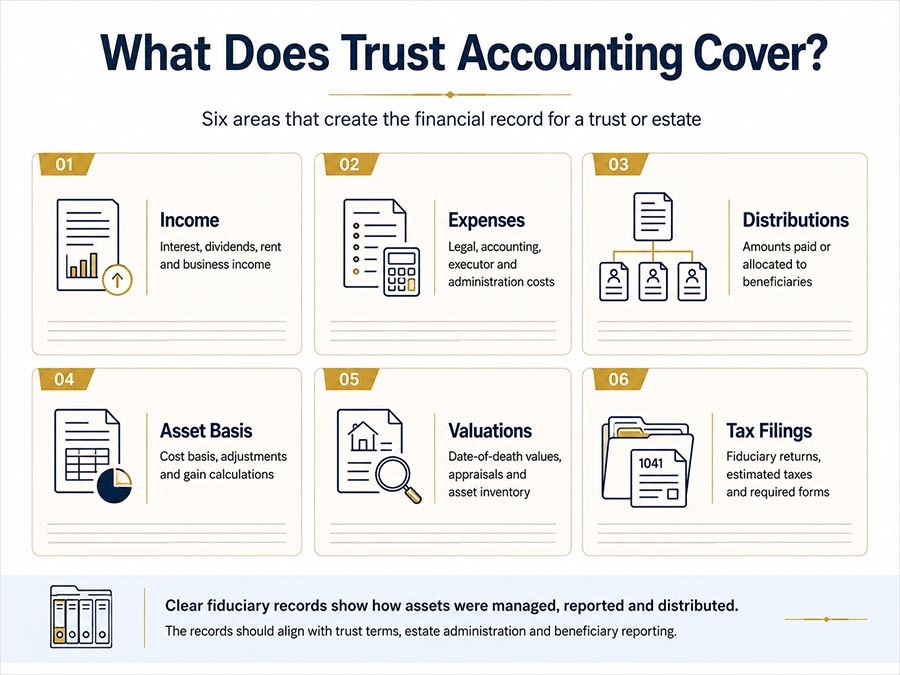
Trust and estate accounting becomes essential when you’re responsible for managing the assets that belong to an estate, trust or beneficiary group. A trust accountant organizes the financial activity behind that responsibility, which typically includes:
Income
Expenses
Distributions
Asset basis
Valuations
Required tax filings
If you’re serving as an executor or trustee, these records form the financial trail showing how assets were managed and reported. Paul Miller, founder and CPA at Miller & Company, LLP, advises fiduciaries to bring in an estate accountant as soon as possible, before finalizing the filings, asset sales or beneficiary distributions.
The firm assists executors, trustees, beneficiaries and family business owners across New York City, Florida and Washington, DC. “When an estate or trust includes appreciated property, we many need to review your capital gains tax planning before selling or transferring any assets,” says Miller. “But an experienced estate planning accountant does more than prepare tax forms. Records must show how the assets moved, who received them and how those transactions affect future wealth transfer tax planning.”
What Are Fiduciary Accounting Services?
Fiduciary tax services separate the tax responsibilities of a decedent from ongoing estate or trust activity. An estate accountant determines which income belongs to which return before setting the filing position for the estate. That distinction matters because pre- and post-death activity may appear in the same bank account, property sale or investment statement. For a fiduciary tax and accounting review, useful records include:
Final personal income tax return review
Fiduciary income tax return preparation and estimated tax issues
Trust or estate bank and brokerage statements
Bills, professional fees and administration expenses
Real estate income, repairs and sale documents
Beneficiary distribution records and notices
After separating the filing responsibilities, attention shifts to the taxable transactions, such as sales, distributions, rental income or business activity. If a closely held company is part of the estate, your CPA may need to coordinate business tax preparation services with the fiduciary return. A trust CPA connects those decisions to the records while there’s time to document them clearly.
How Does Inheritance Tax Planning Work after a Death?
After a death, estate tax return preparation usually begins by identifying what changed on the date of death. An estate tax accountant reviews how the assets were titled, when income was received, which expenses were paid and whether any property sale or beneficiary distribution was being considered. That timeline matters because the fiduciary return must reflect actual activity, not reconstructed records.
The next step is to connect those records to the filing calendar. If the estate generates income, estimated tax obligations may apply before distributions can occur. Multi-state tax accounting comes into play when trustees, beneficiaries or estate assets are spread across boundaries. If the estate includes an operating business, the estate CPA may need to coordinate business tax strategy or corporate tax planning with the estate before ownership interests are valued, transferred or reported.
What Records Does an Estate Accountant Review?
An estate accountant reviews post-death activity before preparing the Internal Revenue Service (IRS) forms. That usually includes interest, dividends, rental income, capital gains, legal fees, executor fees, accounting fees and distributions. If real estate or securities were sold, basis and valuation support are required to ensure accurate reporting.
Date-of-death values support income tax reporting, beneficiary questions and estate tax review. If you require estate tax return preparation, the estate CPA performs valuations, appraisals and a full asset inventory. When investment real estate is involved, you may consider 1031 exchange tax planning before a sale. The goal is to keep your tax reporting aligned with the administration records. The review may include:
Estate or trust EIN, fiduciary contact information and filing period notifications
Whether the fiduciary return is initial, ongoing or final
Income details for ordinary income, capital gains, tax-exempt income and deductions
Administrative expense allocation when costs affect multiple returns
Beneficiary names, addresses, taxpayer identification numbers and allocation percentages
Estimated tax payments, withholding and related tax notices
Attorney notes about trust terms, required distributions or court-approved actions
What Activity Does a Trust CPA Review for the Beneficiary Reporting?
A trust CPA connects trust activity to the information beneficiaries receive on Schedule K1, which reports a beneficiary’s share of estate or trust income, deductions, credits and distributions. The key issue is not only what the trust earned, but whether trust’s terms, distributions and tax rules shift income to beneficiaries or retain it within the trust.
A trust tax accountant reviews the distribution timing, required income payments, retained income and allocation percentages so reporting aligns with the trust records. If charitable beneficiaries or directed charitable gifts are involved, charitable giving tax planning affects the distribution reporting. Fiduciary accounting services document not only what each beneficiary received, but why allocations followed the trust terms.
Frequently Asked Questions (FAQs) about Trust and Estate Accounting
When should I call an estate CPA?
Call a trust accountant when you become an executor or trustee, before assets are sold or beneficiary distributions are made.
Does every estate need estate tax return preparation?
No, but every estate may need income tax reporting, accounting records, inheritance tax planning and beneficiary documentation, especially for high-net worth individuals.
What does a trust accountant need first?
Start with the trust document, asset list, bank records, brokerage statements and distribution history.
Do fiduciary accounting services reduce family disputes?
Yes. Clear records reduce confusion by showing income, expenses, sales and distributions.
Why does a trust tax accountant review distributions?
Distributions determine whether income is taxed to the trust, estate or beneficiaries.
How Should I Start Trust and Estate Accounting?
A trust and estate accounting review leaves you with a clear filing and record plan. With the CPA, you identify whether the next step belongs with Form 1041, estimated tax, asset valuation, beneficiary records or estate tax review. Before moving any money, you have to identify any missing documents and make tax decisions affecting that money.
For fiduciaries, early accounting protects more than the tax return. This practice provides a defensible record for beneficiaries, courts, advisors and future filings. So contact Miller & Company, LLP for wealth transfer tax planning and trust and estate accounting.
Stay Connected
Creative advice and outstanding performance
Expect a thorough commitment to excellence. Creative advice and outstanding performance — merged with relentless dedication and vigilant customer service — mean that your CPA responds quickly to requests and questions. Accounting experts are just a phone call away.
A full-service consulting and accounting firm in New York
“Nothing less than the best.” That’s what current and former clients say about Miller & Company. It’s that reputation for excellence that drives successful individuals and businesses to work with this team.
The financial expertise you’ll find at Miller & Company is unparalleled in the Manhattan and New York City areas. Your personal CPA gets to know who you are — identifying the objectives you have and the challenges you face. Then, using a wide range of innovative business strategies, you’ll receive breakthrough solutions that no other accountants thought possible.
Professionalism is more than certifications and degrees
Professionalism is more than certifications and degrees -- all of which you’ll find at Miller & Company. Professionalism at Miller & Company means you’re always treated with the respect you deserve. Professional CPAs embrace their commitment.
When you contact this New York City accounting team, you receive the most up-to-date information, the most innovative financial concepts and the best possible solutions. You get accountants honesty and integrity necessary to earn your trust. Your satisfaction is paramount.